

New, Used, or Liquidated: How to Actually Choose Office Furniture

Updated: Feb 18

Here's a question that trips people up more than it should:
What's the difference between used office furniture and liquidated office furniture?
Most people shrug and say "same thing, right?" They're not the same. Not even close. And understanding the difference might save you thousands of dollars—or save you from a purchase you regret.
Let's clear this up.
The Three Categories, Explained
New Furniture
You know what new means. Factory fresh, current catalog, full warranty, original packaging.
The appeal: It's yours first. No mysteries about previous owners, no wear patterns, no questions. You pick the finish, the configuration, the options. It arrives in boxes with that new furniture smell.
The reality: You're paying full price, and lead times can stretch into weeks or months depending on what you order. Custom configurations take longer. Supply chain hiccups happen.
Best for: Specific requirements where nothing else will do. Brand-new spaces where everything needs to match perfectly. Situations where warranty coverage matters most.
Used Furniture
This is the category most people picture when they think "secondhand." Furniture that's had a life. Maybe a long one.
What you're getting: Pieces that have been owned, used, and resold. Condition varies wildly—anything from "barely touched" to "this has seen some things." Provenance is often unknown. You might find gems. You might find someone else's problems.
The risk: Wear and tear, outdated styles, mystery stains, wobbly mechanisms that worked fine for the previous owner (they were just used to it). Warranty is typically long gone.
Best for: Tight budgets where aesthetics are secondary. Temporary setups. Buyers who know exactly what to look for and don't mind hunting.
Liquidated Furniture
Here's where it gets interesting.
Liquidation happens when businesses close, merge, relocate, or downsize. A tech company raises funding, leases 20,000 square feet, furnishes it beautifully—then pivots to remote work eighteen months later. A law firm consolidates offices. A startup doesn't make it.
Their furniture has to go somewhere. Often quickly.
What you're actually getting: High-quality, name-brand furniture that's barely been used. We're talking executive desks that sat in corner offices for a year. Ergonomic chairs that were part of someone's "return to office" plan that never happened. Conference tables from boardrooms that hosted maybe two dozen meetings.
This isn't "used" in any meaningful sense. It's almost-new furniture at significant discounts—sometimes 50-70% off retail.
Why it's different from "used":
Known origin and history (we know where it came from)
Minimal wear (often months old, not years)
Premium brands that rarely show up in used markets
Curated selection (not random castoffs)
Best for: Smart buyers who want quality without the full price tag. Growing companies that need to furnish space without draining capital. Anyone who'd rather spend money on their business than on furniture markup.

The Real Question: What Are You Actually Buying?
Furniture has three components you're paying for:
Materials and construction — the physical quality of the thing itself
Condition — how much life has been used up
The "new" premium — what you pay to be the first owner
Here's the math most people don't do:
A $1,500 office chair doesn't become a $200 chair because someone sat in it for six months. The materials are the same. The construction is the same. 95% of its functional life remains.
What you're not paying for is the "new" premium—that intangible tax on being first.
Liquidated furniture strips away that premium while keeping the quality and condition intact.
Used furniture might offer good value, but condition is the gamble.
How to Evaluate What You're Looking At
For New Furniture:
Is this the right piece, or the right piece that's available? Don't settle just because it ships faster.
What's the actual lead time? Get specifics.
Understand the warranty—what's covered, what's not, for how long.
For Used Furniture:
Sit in it. Open every drawer. Roll every caster. Test every mechanism.
Look at edges, seams, and joints—that's where wear shows first.
Ask about history. If the seller doesn't know (or won't say), proceed with caution.
Factor in the cost of fixing problems. That "great deal" needs reupholstering? Add $500.
For Liquidated Furniture:
Ask where it came from. Reputable liquidators know the source.
Check the age. Six months in an office is nothing. Six years is a different conversation.
Look for the same quality markers you'd check on new: drawer slides, joinery, edge condition.
Compare to current retail. Know what you're saving.
The Honest Pros and Cons
New
✓ Full warranty and support
✓ Exactly what you spec
✓ No previous wear
✗ Highest cost
✗ Longest lead times
✗ Depreciation hits the moment it's yours
Used
✓ Lowest price point
✓ Immediate availability
✓ Sustainable choice
✗ Condition uncertainty
✗ Limited selection
✗ No warranty
✗ May need repairs or cleaning
Liquidated
✓ Premium quality at reduced prices
✓ Minimal wear, known history
✓ Immediate availability
✓ Sustainable (keeps furniture out of landfills)
✗ Selection depends on what's available
✗ May not find exact match for existing furniture
✗ Quantities can be limited
When Each Option Makes Sense
Go new when:
You need a specific configuration nobody else will have
Brand consistency matters (matching existing furniture exactly)
You're furnishing a flagship space where perception matters most
Warranty coverage is non-negotiable for your organization
Go used when:
Budget is the primary constraint, full stop
You're furnishing temporary or transitional space
You have time to hunt and expertise to evaluate
Aesthetics are secondary to function
Go liquidated when:
You want quality but not the quality price
You're furnishing a growing company and need capital elsewhere
You appreciate that a $3,000 desk is still a $3,000 desk at $1,200
You'd rather see nice furniture get reused than scrapped
A Note on Sustainability
Here's something that doesn't get discussed enough:
Office furniture is heavy, bulky, and often ends up in landfills when companies close or relocate. The environmental cost of manufacturing new furniture—materials, energy, shipping—is substantial.
Choosing liquidated or quality used furniture isn't just a financial decision. It's keeping perfectly good furniture in use instead of in a dumpster.
That $4,000 conference table from the startup that didn't make it? It still has decades of life left. Someone should use it.

The Bottom Line
"New versus used" is the wrong framing. The real question is: what combination of quality, condition, and price makes sense for your situation?
New furniture makes sense sometimes. Used furniture can be a find if you know what you're doing. But liquidated furniture—almost-new pieces from businesses that simply don't need them anymore—hits a sweet spot that most buyers don't even know exists.
The best deals aren't always the cheapest. They're the ones where you get the most value for what you spend.
And a barely-used executive desk at half price? That's value.
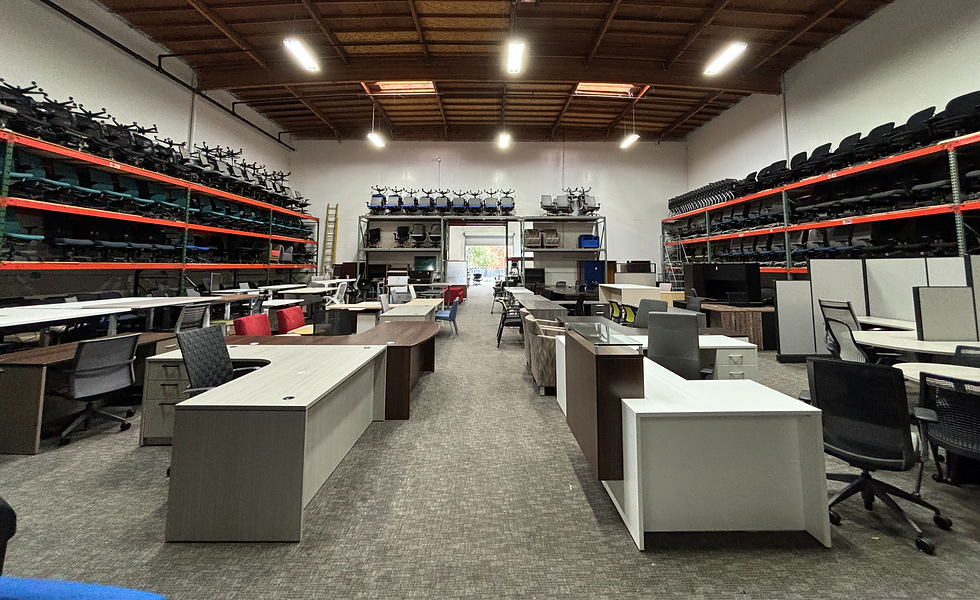
Jamesville Office Furniture operates Northern California's largest office furniture showroom, featuring new furniture alongside our liquidation division, Norcal Office Liquidators. We specialize in sourcing high-quality, almost-new furniture from corporate closures, downsizes, and relocations—pieces you can see and touch before buying.
Call : 916-638-4050 -
Email Bryan: bw@jamesvillefurniture.com
Visit Us: Jamesville Office Furniture
